
Unearth New York
An exploration of prehistoric New York State
Abstract:
This thesis explores the use of immersive technology to recreate an underwater environment from the Devonian period in what is now New York State. The goal is to provide a more engaging learning experience than traditional museum displays like dioramas or wall signage. Using the Unreal Engine and 3D modeling tools such as Cinema 4D, Maya, ZBrush, and Substance Painter, the project builds a detailed and interactive digital world filled with ancient marine life. By combining visual storytelling with real-time interaction, this simulation aims to make science education more exciting and memorable, especially for younger audiences.
Project Statement:
How can we design an interactive digital experience that creates a more memorable and engaging way for children to learn about Earth Science?
Objectives:
-
Create an immersive educational experience that brings the Devonian period to life through interactive 3D design that enhances children's education by offering an alternative to static displays and print
-
Explore the potential of real-time game engines—specifically Unreal Engine—as a tool for educational storytelling and informal science learning.
-
Apply advanced 3D modeling tools (Cinema 4D, Maya, ZBrush, Substance Painter) in the development of scientifically inspired assets.
Research:
After deciding to focus the project on an ancient period of time in New York State. I took a research trip to the Rochester Museum and Science Center exhibit “ Expedition Earth” which includes a glacial ice cave, a replica of a mastodon dig site and dioramas depicting the ancient sea over ancient New York that existed 350 million years ago.
Educating people about the region’s environmental change over the millenia is the main purpose of the exhibit. Accomplished by recreations of animals, plants, rocks, and fossils, 90 percent of which is behind glass. Signage and an occasional touch and feel element is added to support the main display.


Findings:
-
The majority of attendees were parents with young kids. While some adults stopped to read the signs, most everyone else passed through the exhibits very quickly.
-
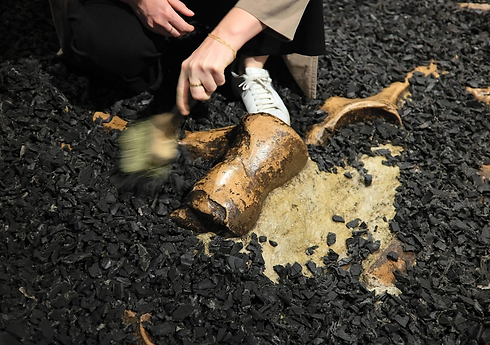
Parents with kids settled in one area that featured a play mastodon dig site. The hands-on exhibit is a small area that contains casts of mastodon bones on the floor covered in recycled tires mimicking dirt. Kids use brushes and shovels to move the “dirt” and discover the fossils.
It was clear that interactive learning was much more interesting to school age kids.
Concept and Development:
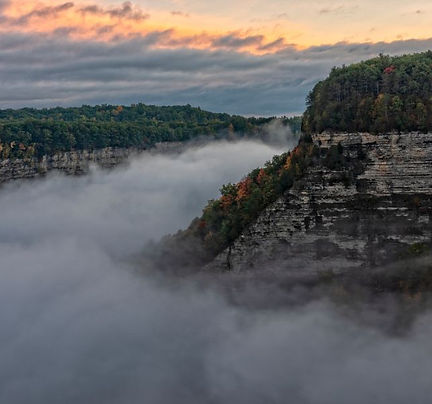
Focusing to study this specific time period allowed for a direct connection to the visual landscape of today. Most of surface rock that can be seen cut along the highway or eroded in gorges is the ancient sediment from the tropical sea 350 million years ago. When that sea evaporated it left behind layers of salt that accumulated and would become present day salt mines. The sediment that was layered in the sea would prove to make excellent soil for vinyards due to the limestone (skeletons of ancient sea creatures) and shale deposits
The Unreal Engine is the ideal platform for this project as it is an industry leader in real-time rendering . Original designed for AAA game production, it has surpassed its original role and has expanded into other industries like TV and Film, Architecture, Automotive, Education and Training.
.jpeg)
After initial sketching and planning, a workflow was established to build a visually rich and interactive Devonian underwater simulation. The process moved from Cinema 4D to ZBrush, Substance Painter, and finally Unreal Engine. Base forms were modeled in Cinema 4D, which offered flexible tools ideal for quickly shaping marine life and environmental elements. These models were then sculpted in ZBrush to add high-resolution surface detail. After sculpting, the surface details were baked into texture maps and exported alongside a low-poly mesh. The assets were then brought into Substance Painter, where color and additional surface details were added to create layered, realistic textures. Final assets were imported into Unreal Engine and assembled into a dynamic environment to complete the immersive experience. This pipeline supported both creative control and technical efficiency.


Plans for how to divide and extrude geometry.
A Procreate drawing to visualize the environement.

Create a general shape of the creature using simple shapes in Cinema 4D.

Use the Volume builder to combine the shapes.

Import low polygon mesh into Substance Painter. Apply high detailed UV’s for the texture map. Paint and export to Unreal.
Create a general shape of the creature using simple shapes in Cinema 4D.
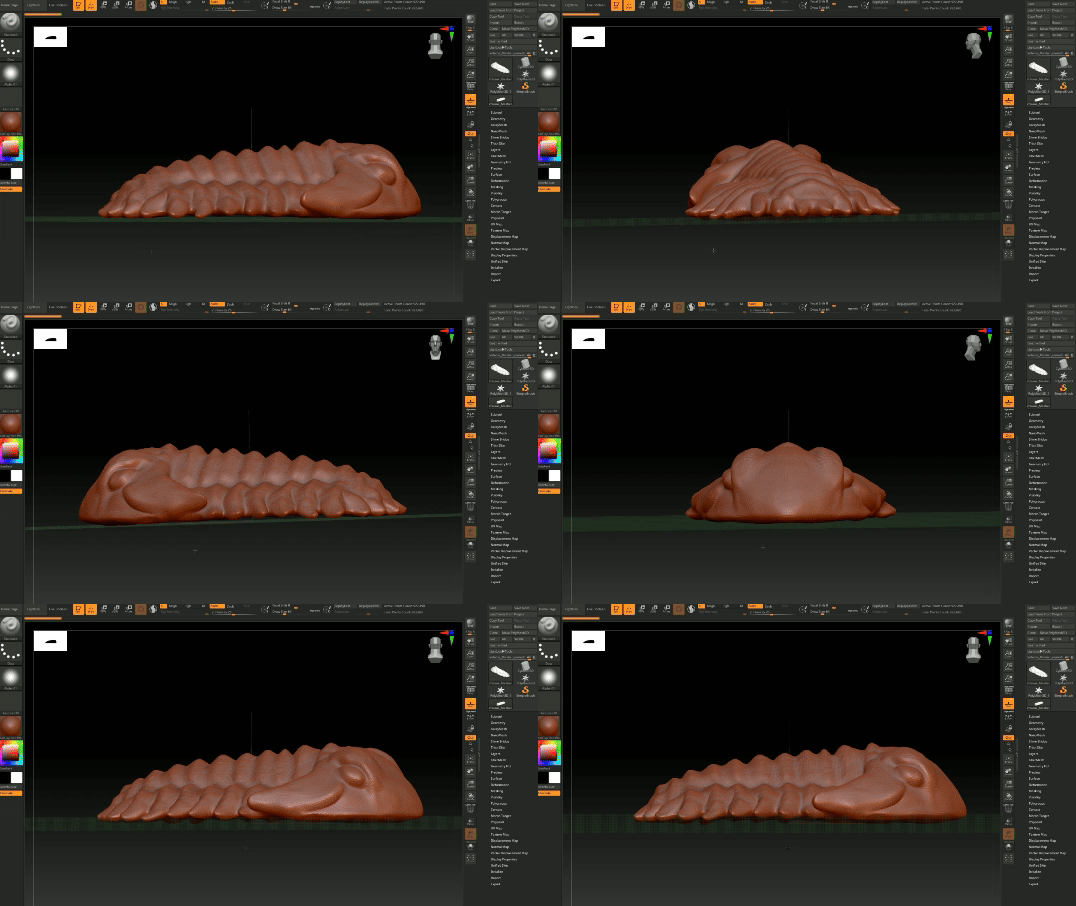
The sculpting workflow that was created. Click through the images for more.
Results:
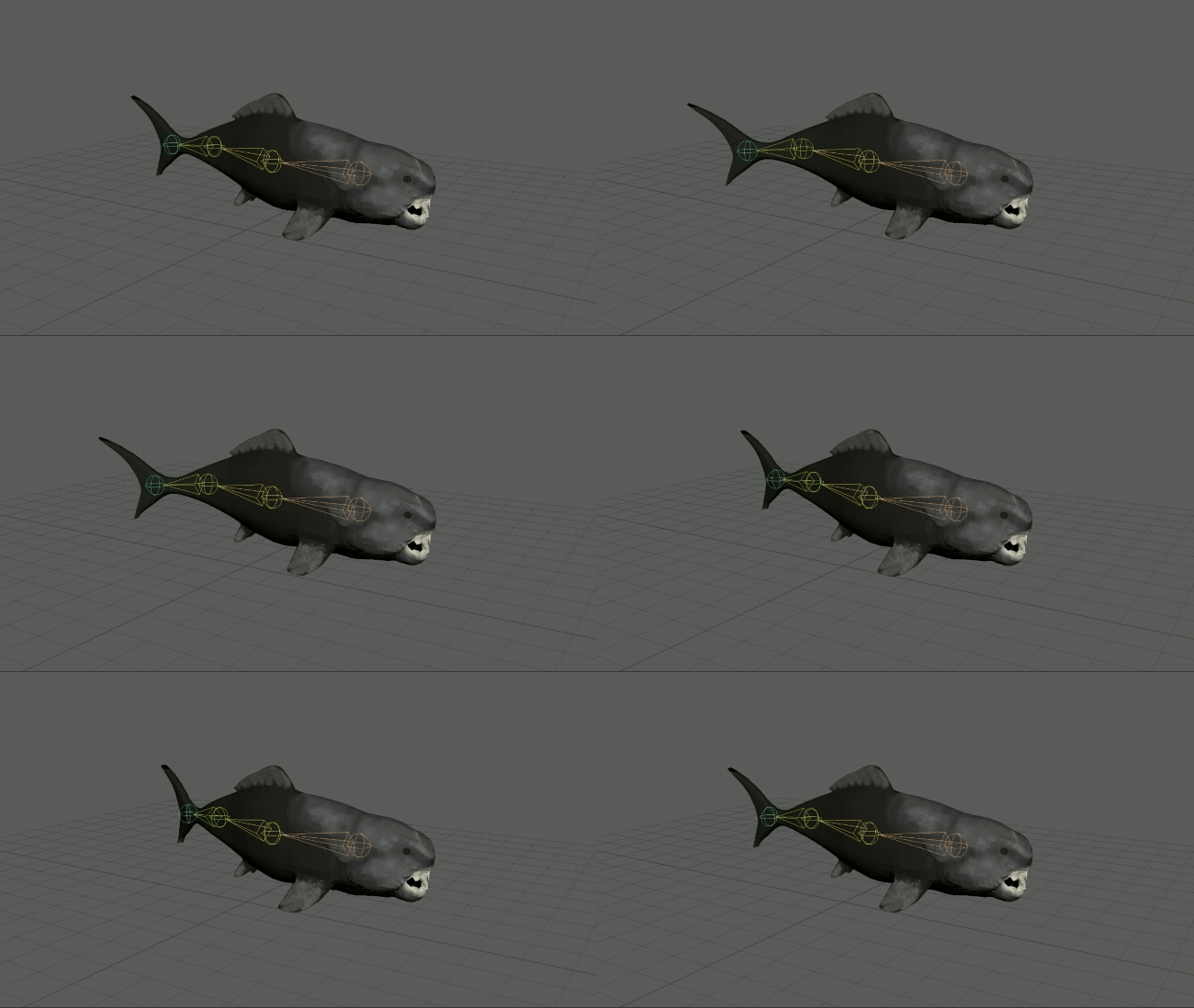
This project successfully delivered an interactive underwater simulation , designed to enhance how children learn about Earth Science. By using the Unreal Engine and advanced 3D modeling tools, the experience transformed static museum-style content into a dynamic, immersive environment filled with lifelike prehistoric marine life. The simulation effectively demonstrated how design and real-time technology can make scientific learning more engaging and memorable. The project achieved its goal of offering an innovative alternative to traditional learning tools.



Showcase:
Presenting the project at Imagine RIT was a rewarding opportunity. Both adults and children were drawn to the realistic environment. By Sharing the project with a broader audience allowed for allowed interesting conversation and helpful feedback.
Demonstrating the full workflow from modeling to texturing helped showcase the complexity and thought behind the design. The event served as a strong platform to exhibit how immersive technology can enhance science education.
Challenges:
Learning the Unreal Engine presented several challenges, particularly due to its complexity and steep learning curve. Adapting to a game development environment meant learning new workflows and terminology. Given the complexity of theUnreal Engine, navigating its interface proved to be the most significant challenge. Moreover, many available tutorials were either heavily reliant on the now-defunct Quixel Megascans, or lacked clear presentation. Connecting with a professor in the 3D Digital Graphics program ultimately proved to be the most effective and helpful approach.
Work Cited